
AT A GLANCE
Before you go
- Confirm the site’s purpose and permitted activities.
- Use temple-specific guidance for sacred spaces.
- Do not infer temperature or swimming permission from a name.
Read the name as a starting point
A destination name cannot tell you everything about its water or visitor experience. Thermal pools are commonly visited for bathing, while sacred springs may be part of an active religious site.
Some places have cultural meaning alongside recreational facilities, so even a bathing venue deserves respectful behaviour. Before arrival, find out who manages the place, what visitors may do and which areas are reserved. Treat the actual rules on site as more important than a simplified travel label.
Understand the purpose of a temple visit
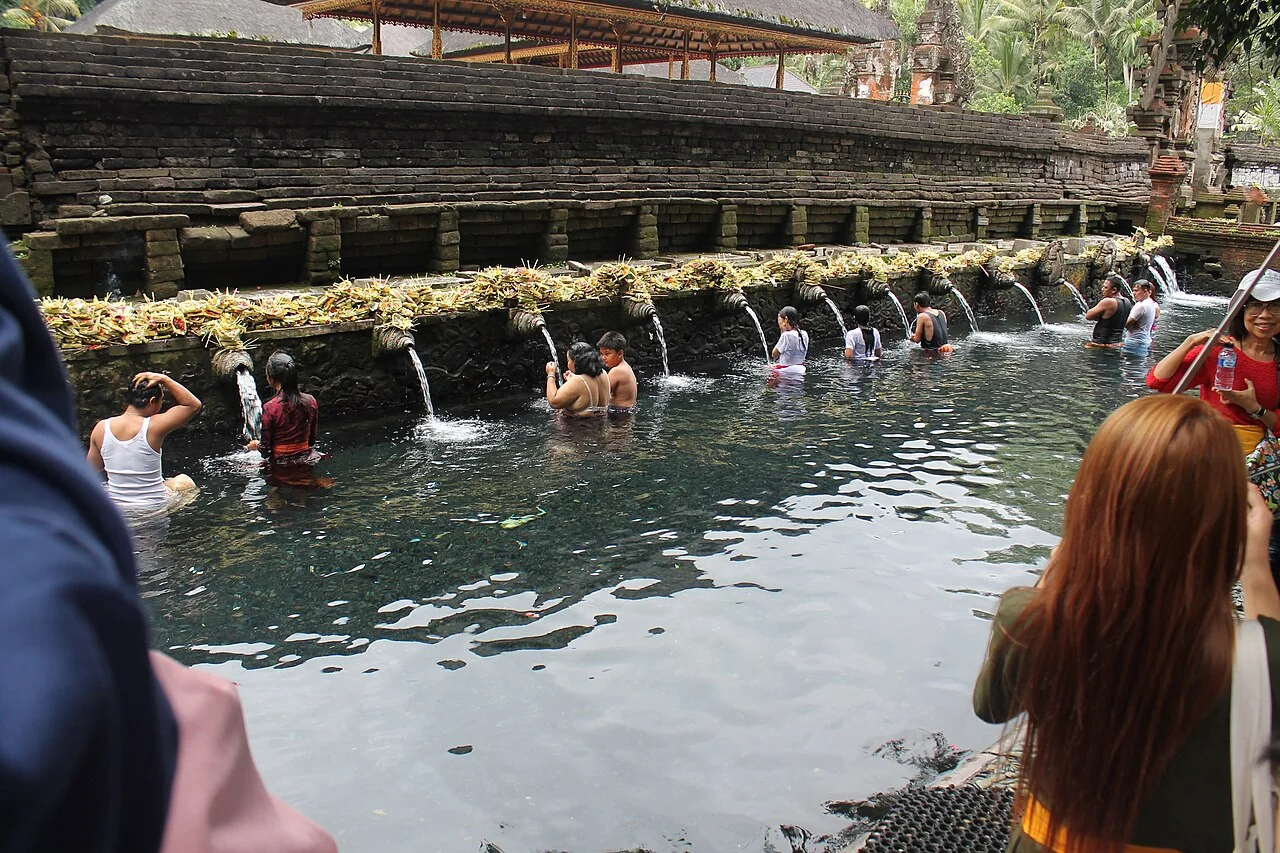
Tirta Empul is a Hindu water temple associated with sacred spring water and purification practices. A visitor can appreciate the setting without assuming a right to enter every pool or take part in a ritual.
Ask local staff about appropriate participation and observe worshippers’ space. If your goal is a leisurely swim in warm water, research a managed thermal venue instead. A cultural visit is worthwhile on its own terms and does not need to imitate a resort experience.
Pack for the activity you have confirmed
For a bathing venue, ask about swimwear, changing areas and towel arrangements. For a temple, check dress and entry guidance before leaving your accommodation.
Do not assume that clothing suitable for a pool is appropriate in surrounding religious spaces. Keep a separate dry outfit and protect belongings from water. If you intend to visit both kinds of place in one day, plan time to change properly rather than moving directly between them in wet clothing.
Use accurate language in your itinerary
Write the name of the site and the intended activity in your plan: temple visit, managed hot-spring bathing or water-garden walk. This simple habit helps drivers, guides and travel companions understand what you expect.
Avoid repeating claims that water guarantees healing or that a ritual will produce a particular personal outcome. For planning purposes, the important questions are access, etiquette, comfort and the meaning of the place to the community that looks after it.
A LITTLE MORE CLARITY
Common questions
Is Tirta Empul a hot-spring resort?
No. It is a sacred water temple. Plan it as a cultural or religious-site visit and follow the guidance provided there.
Can a spring have both cultural and recreational importance?
Yes. Categories can overlap, which is why local rules and the purpose of each area matter more than a simple label.
Sources & planning resources
Destination context and official planning links are listed below. Itineraries and checklists are independent planning suggestions, not confirmed tours or reports of a personal site inspection. Confirm current access, prices and facilities with the relevant provider.