Bali water temple etiquette begins with a simple principle: religious life takes priority over your itinerary. A site may welcome visitors while reserving particular areas, activities or times for worship. Arrive prepared to adapt, and treat instructions from attendants as more relevant than something you saw in an older travel video.
This guide explains how to approach the visit. Specific requirements belong to each temple and may change with ceremonies or access conditions.
Dress for the place you are entering
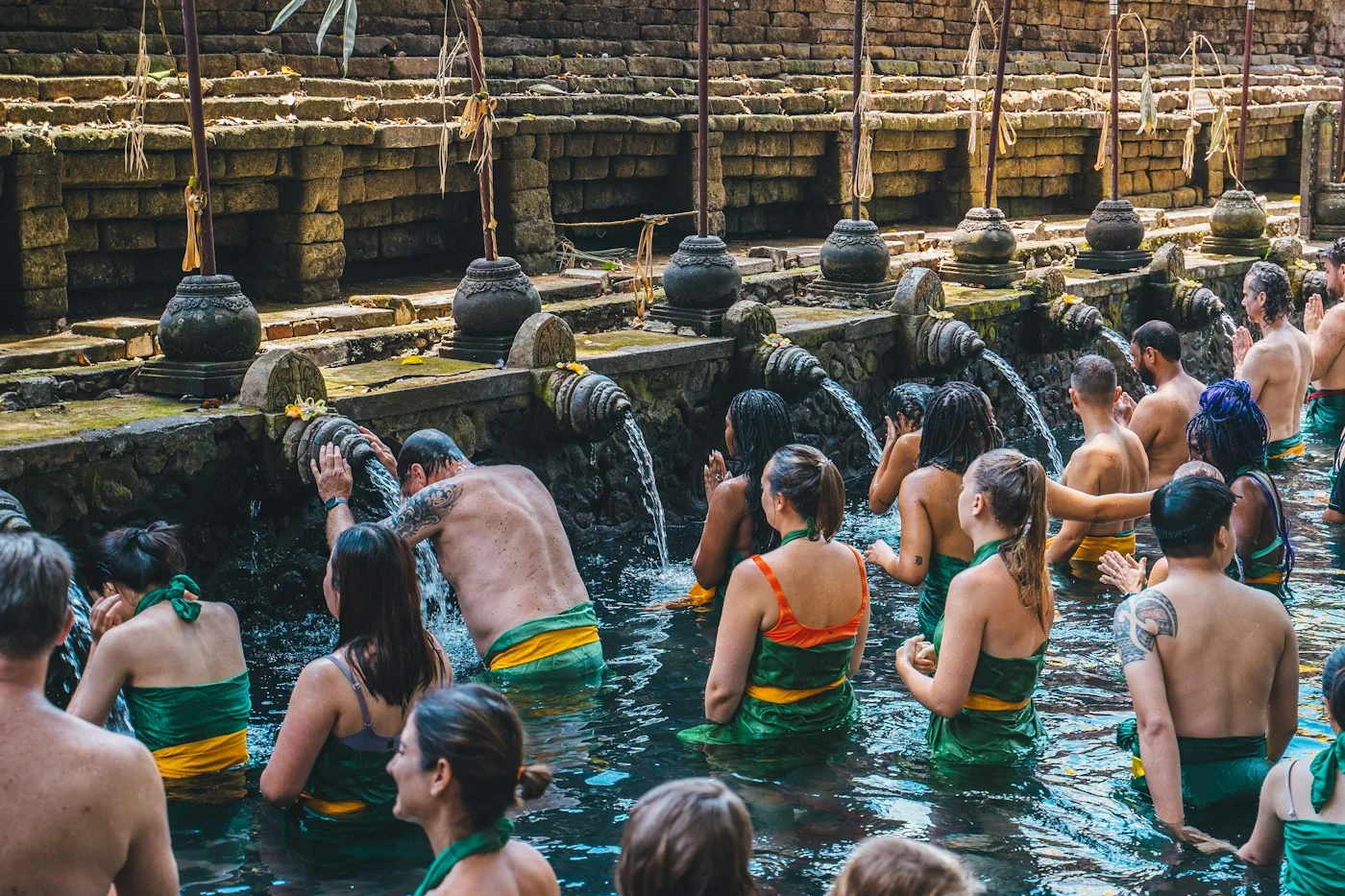
Check the temple’s requirements before leaving your accommodation. Bring suitable clothing and use a sarong or sash where required. Do not assume that swimwear with a loose cover-up is appropriate simply because a temple contains bathing pools. For any authorised water ritual, ask what clothing is permitted and how to change afterwards.
If you are uncertain, ask before entering rather than waiting to be corrected. A small dry bag for spare clothing can make a combined culture-and-nature day much easier.
Recognise boundaries without testing them
A closed gate, a rope or an attendant’s instruction is a boundary, not an invitation to look for another entrance. Sacred areas may be inaccessible to ordinary visitors. Avoid following a local worshipper into a space just because the path is open to them.
The same principle applies to ceremonies. Leave routes clear and do not place bags, tripods or yourself where people need to move. If a ceremony changes your plans, use the extra time for a meal or another permitted activity instead of insisting on the original schedule.
Let photography follow consent
Photograph architecture or water only where permitted. Ask before making identifiable people the focus of an image, especially when they are praying, bathing or carrying out a ritual. Permission from a tour companion does not replace permission from the person being photographed.
Avoid staging spiritual gestures for content. A quieter approach often results in a more thoughtful record of the place and a better experience for everyone sharing it.
Participate only with clear local guidance
You do not need to join a ritual to show interest or respect. If you choose to ask about participation, explain that you are a visitor and would like to understand what is appropriate. Different water spouts and spaces can have distinct meanings; copying the person in front of you is not a substitute for guidance.
Our Tirta Empul guide introduces one important sacred-spring site. It deliberately leaves ritual instruction to temple attendants and knowledgeable local guides.
Keep everyday behaviour considerate
Speak at a level that fits the setting, put litter in the right place and keep food or drink away from restricted areas. Watch where you step and avoid moving offerings or objects to improve a photograph. If you make a mistake, acknowledge the correction and adjust without argument.
A useful final check is to ask yourself whether your next action helps you understand the place or asks the place to perform for you. Respectful travel does not require knowing every custom in advance. It requires attention, humility and a willingness to follow the people responsible for the site.
Sources & planning notes
Destination context and visitor guidance are linked below. Suggested routes and booking checklists are Bali Springs planning ideas, not confirmed tours. Check current access, facilities and rules with the relevant venue.
Source review: 29 September 2026.