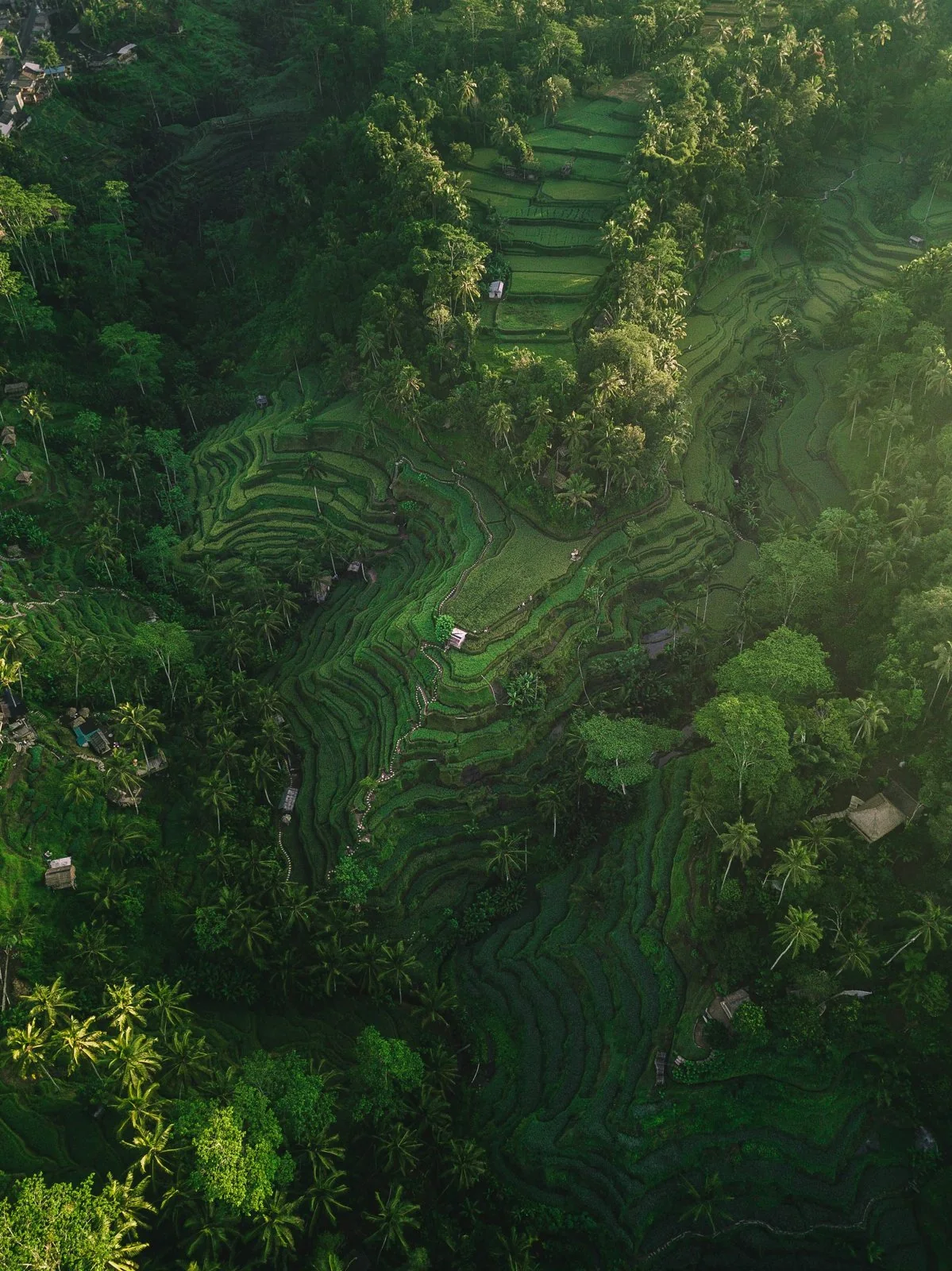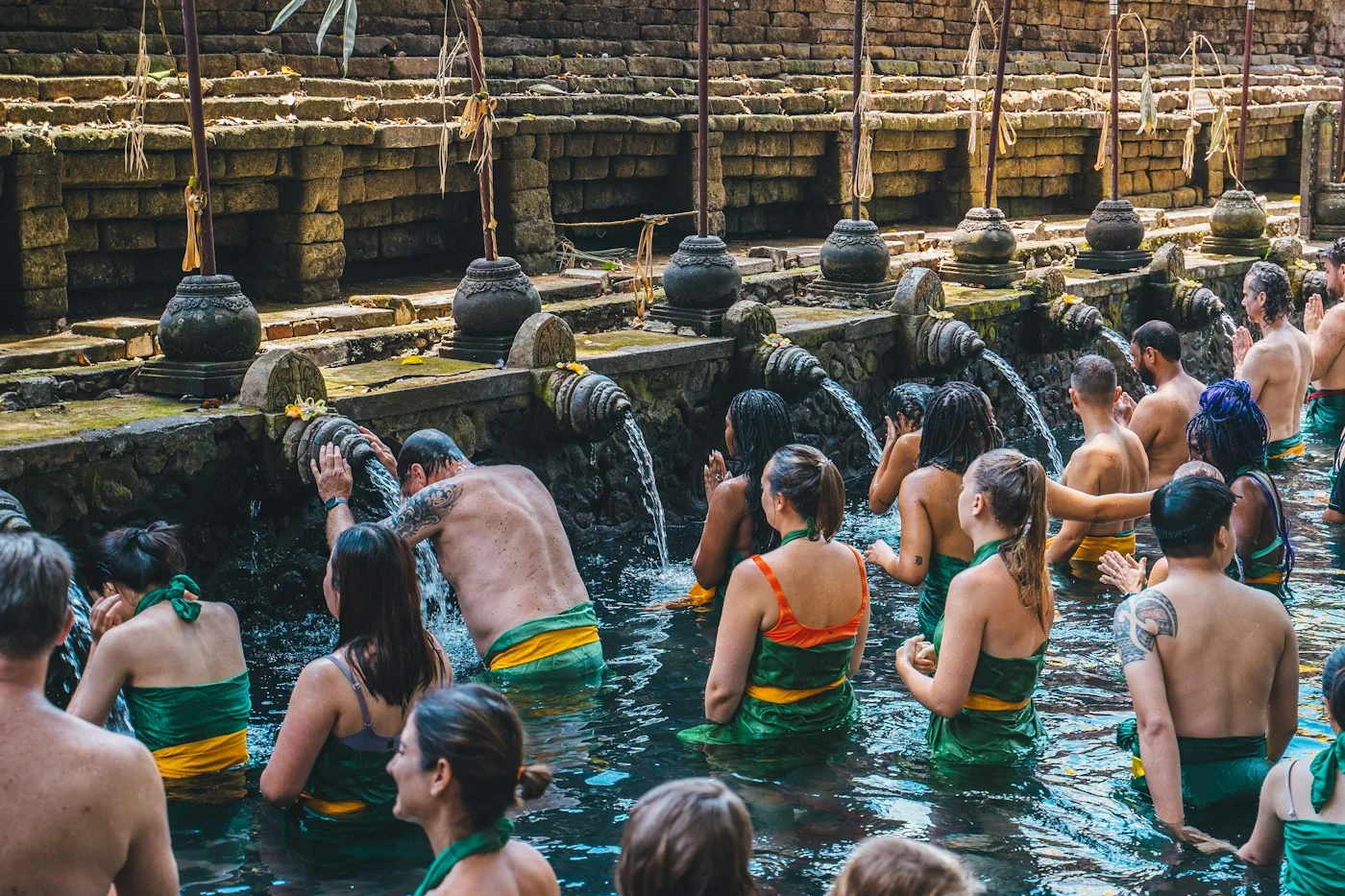
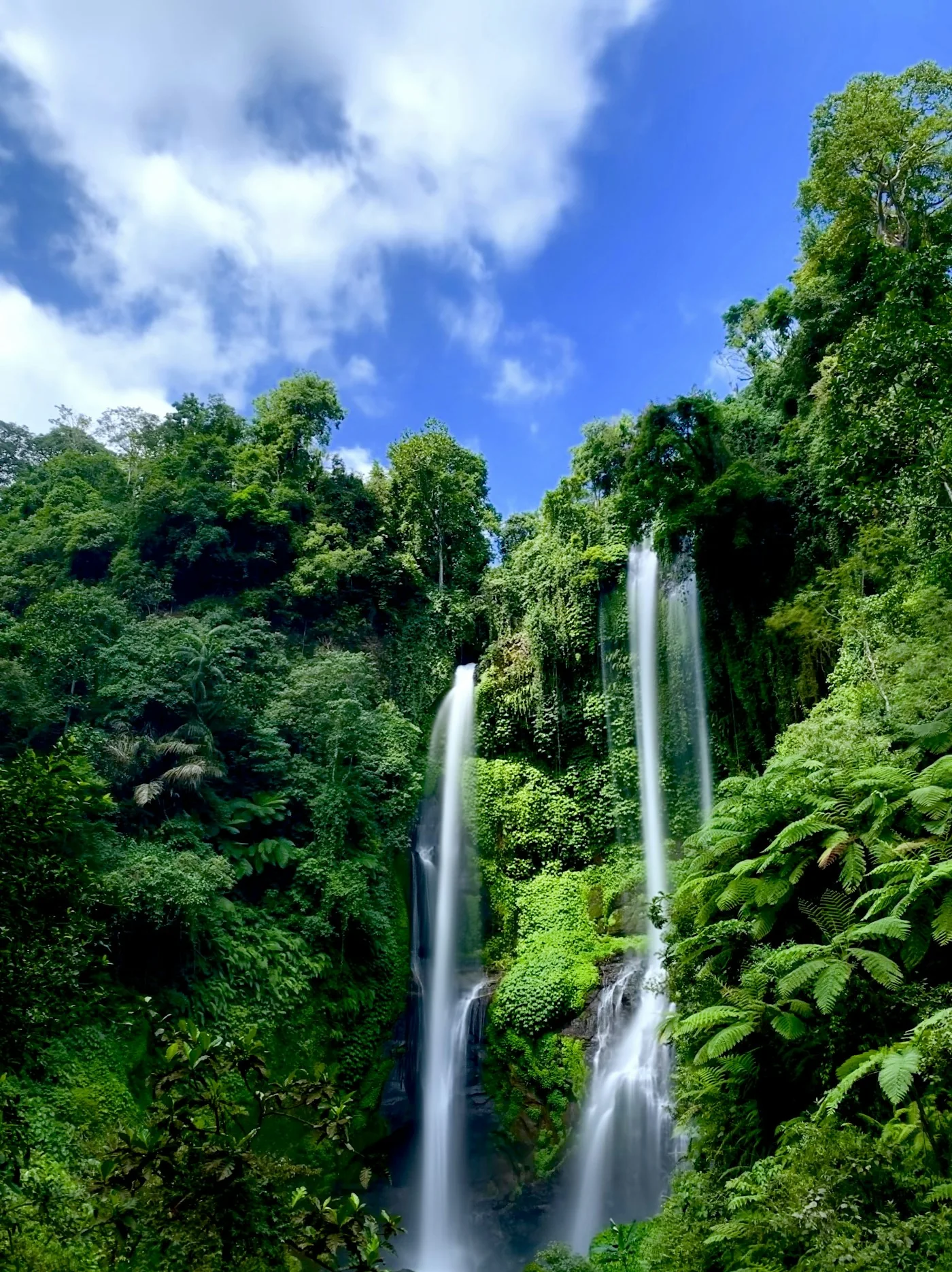
Responsible nature travel in Bali starts with recognising that the landscape is not empty. A rice terrace is worked, a temple is used for worship and a village path may connect people’s homes and livelihoods. Visitors can enjoy these places more thoughtfully by paying attention to how they are used, not only how they appear in a photograph.
You do not need to make grand claims about travelling perfectly. Choose practical actions you can follow consistently throughout the trip.
Respect the purpose of each place
Treat agricultural paths, sacred sites and recreational pools as different settings with different expectations. Read signs, follow attendants and ask when access is unclear. An open route is not proof that it is available for every visitor activity.
At rice terraces, remain on permitted paths and leave irrigation channels alone. At water temples, give worshippers space and follow site-specific clothing and participation guidance. Our subak introduction explains why water and working land deserve attention beyond their appearance.
Support clear, legitimate local services
Use providers who explain what they offer, where activities take place and what the price includes. For a guided walk, confirm the route and responsibilities before starting. Paying fairly for a clearly agreed service is more useful than expecting informal assistance to be free.
Ask questions politely and keep agreements in writing where practical. If you are unsure about a provider’s role or authorisation, check with the recognised visitor point or your accommodation instead of guessing.
Reduce what you leave behind
Carry a reusable bottle and refill where a suitable supply is available. Keep a small bag for your rubbish, especially on trails where bins may not be nearby. Do not leave food scraps, tissues or small packaging because they seem insignificant.
Avoid introducing soaps, oils or other products into natural waters or shared bathing areas. Follow the venue’s instructions for showers and pool use. Water is part of the environment and local infrastructure, not simply an amenity for visitors.
Give people and wildlife space
Ask before taking close photographs of identifiable people. Do not interrupt work or worship to stage an image. If an animal encounter is offered, investigate how the operator behaves rather than assuming that a tourism listing is an ethical endorsement.
Do not chase, feed or crowd wildlife to improve a sighting. A trip without the expected animal photograph can still be worthwhile. Avoid providers who promise control over a wild animal’s appearance or encourage behaviour that disregards its space.
Choose a manageable route
Spending more time in one region can reduce repeated transfers and give you a better understanding of the place. That does not make any trip impact-free, but it can support a more deliberate holiday. Choose a base that fits your interests and resist adding distant stops simply to complete a list.
If weather closes a route, respect the decision. Do not pressure guides or drivers to continue because you have limited time.
Let attention be part of the experience
Before acting, ask whether you are blocking a path, entering a restricted space or making extra work for someone else. Small adjustments matter: stepping aside, asking permission, carrying waste and accepting a change of plan.
Read the linked provincial visitor guidance for official expectations, and use our temple etiquette guide when cultural sites are part of your journey. The aim is to leave people’s everyday use of the place intact while enjoying your time as a guest.
Sources & planning notes
Destination context and visitor guidance are linked below. Suggested routes and booking checklists are Bali Springs planning ideas, not confirmed tours. Check current access, facilities and rules with the relevant venue.
- Bali Tourism Office — visitor conduct guidance ↗
- UNESCO — Cultural Landscape of Bali and Subak ↗
- Buleleng Tourism Department — Sekumpul Waterfall ↗
Source review: 29 September 2026.