
AT A GLANCE
Before you go
- Stay on visitor paths and leave irrigation structures untouched.
- Ask before photographing people at work.
- Expect fields to change through the cultivation cycle.
See a working landscape, not just a view
UNESCO describes subak as a cooperative water-management system linked with water temples and rice cultivation. That broad relationship is the useful starting point for a visitor.
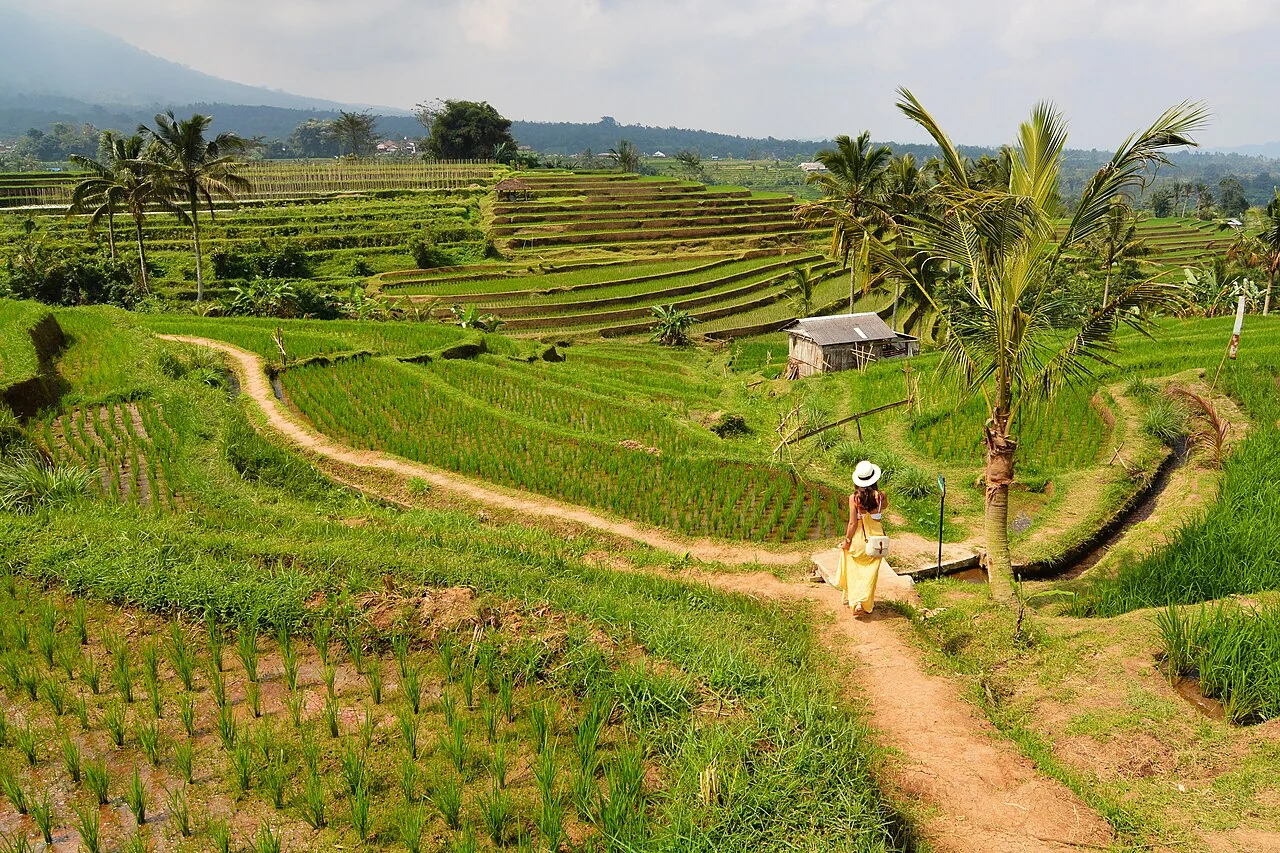
The fields you photograph are also places where people work and coordinate access to water. Look for channels and changes in level without touching gates or barriers. Understanding a little of that function can make a short walk more rewarding than simply searching for the greenest angle.
Notice details without interfering
Pause beside a permitted path and observe how water reaches different parts of the fields. Avoid climbing onto narrow field edges or stepping into planted areas for a closer photograph.
If a farmer is working nearby, ask before taking a portrait or entering their space. A guide can explain local practices in context, but remember that one field visit does not reveal how every community manages its land.
Ask questions that invite local knowledge
Instead of asking only where to take a photograph, ask what is being grown, how the fields change during the cultivation cycle and which routes visitors may use. Keep questions open and avoid interrupting someone who is busy.
If you arrange a guided walk, confirm whether it focuses on farming, landscape interpretation or general sightseeing. Choosing a guide whose interests match yours helps turn a scenic stop into a more thoughtful experience.
Let the season change the picture
Fields do not exist to stay permanently at one photographic stage. A landscape may show young planting, mature crops, harvested ground or water reflecting the sky.
Ask about current conditions if a particular view matters to you, but do not treat another stage as a failed visit. Look for patterns, light and daily activity rather than expecting an exact image from a brochure. The changing appearance is part of understanding a working agricultural place.
A LITTLE MORE CLARITY
Common questions
Is subak only a system of channels?
It is broader than the physical channels. UNESCO describes cooperative water management linked with agriculture and water temples.
Should every rice field look bright green?
No. Appearance changes with cultivation and conditions. A recently harvested or water-filled field is still part of the working landscape.
Sources & planning resources
Destination context and official planning links are listed below. Itineraries and checklists are independent planning suggestions, not confirmed tours or reports of a personal site inspection. Confirm current access, prices and facilities with the relevant provider.